
Description
The FEniCS 2026 conference is an opportunity for all those interested in the FEniCS Project and related projects to exchange ideas, communicate their results and network with the automated scientific computing community. This time it was hosted in Paris (France) at University of Chicago | John W. Boyer Center.
We welcomed developers, existing and potential users of the FEniCS ecosystem, as well as mathematicians, computer scientists, and application domain specialists interested in numerical methods, their implementation and applications.
The FEniCS 2026 conference emphasizes an open and inclusive atmosphere, contributed talks from a diverse range of scientific areas, and dedicated time for discussions and coding.
Links to previous FEniCS conferences can be found here.
Book of abstracts
The final book of abstracts is available at doi:10.5281/zenodo.20632491.
Conference programme
The conference programme can be found here.
Photo Gallery
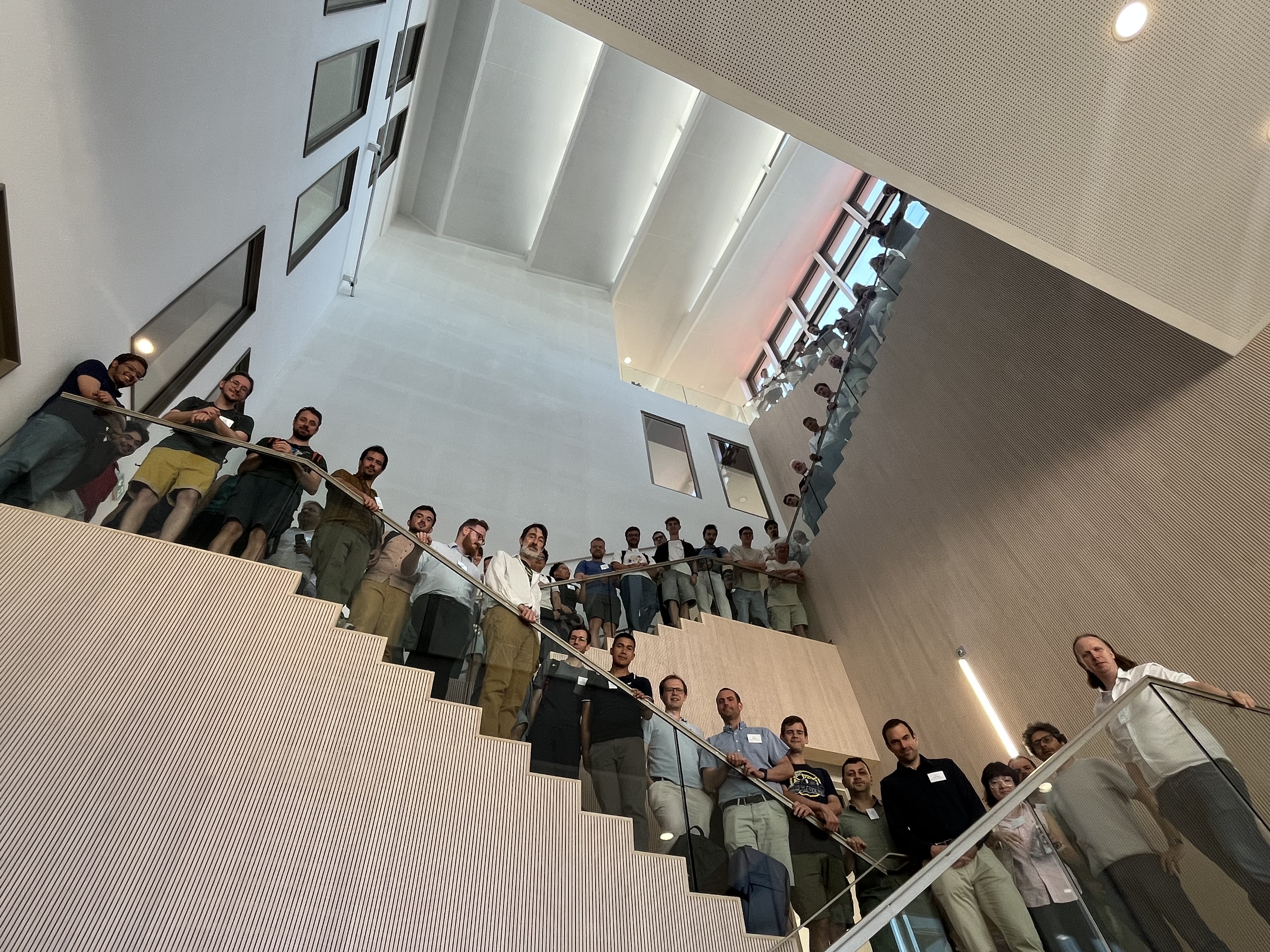
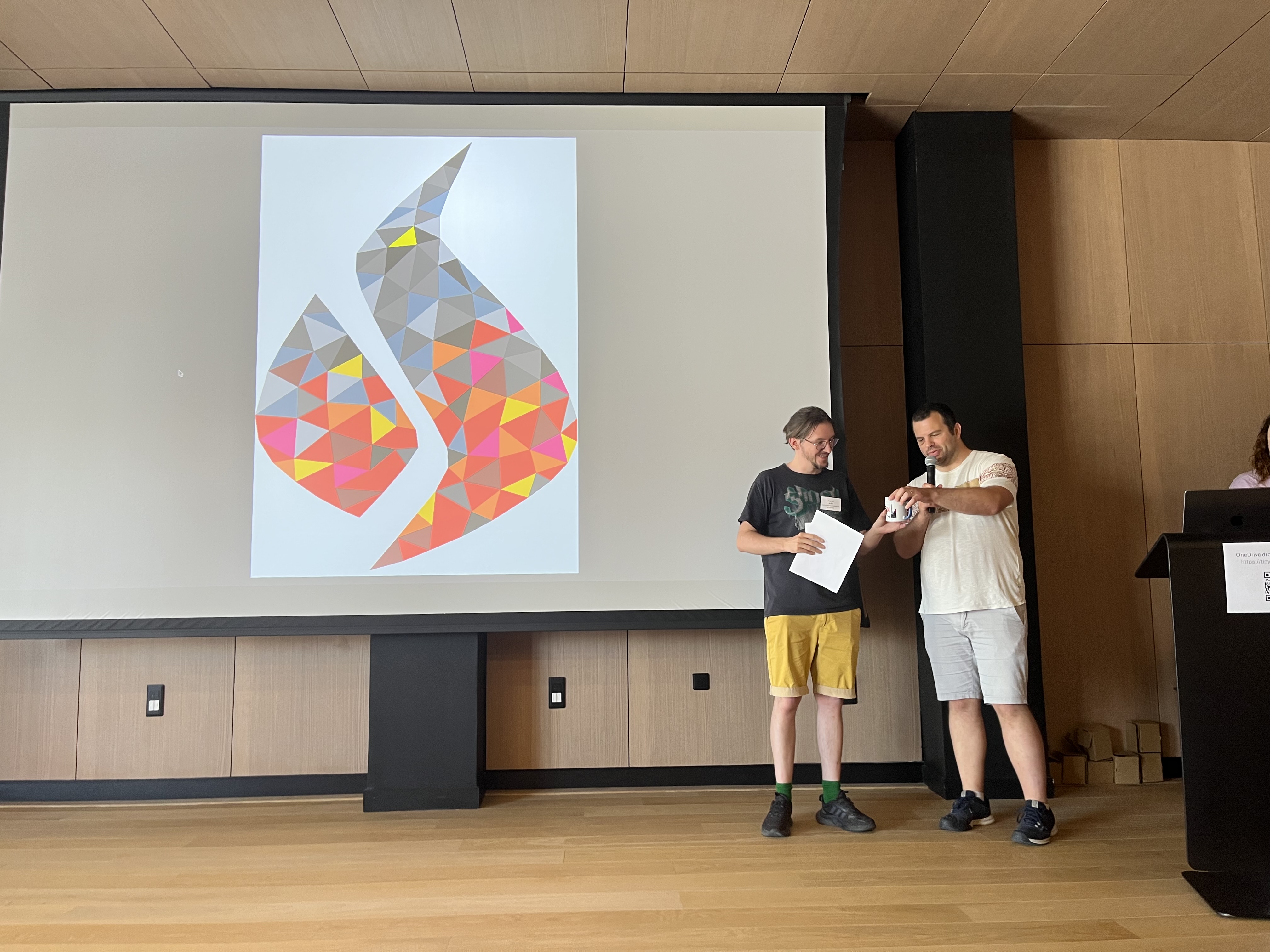
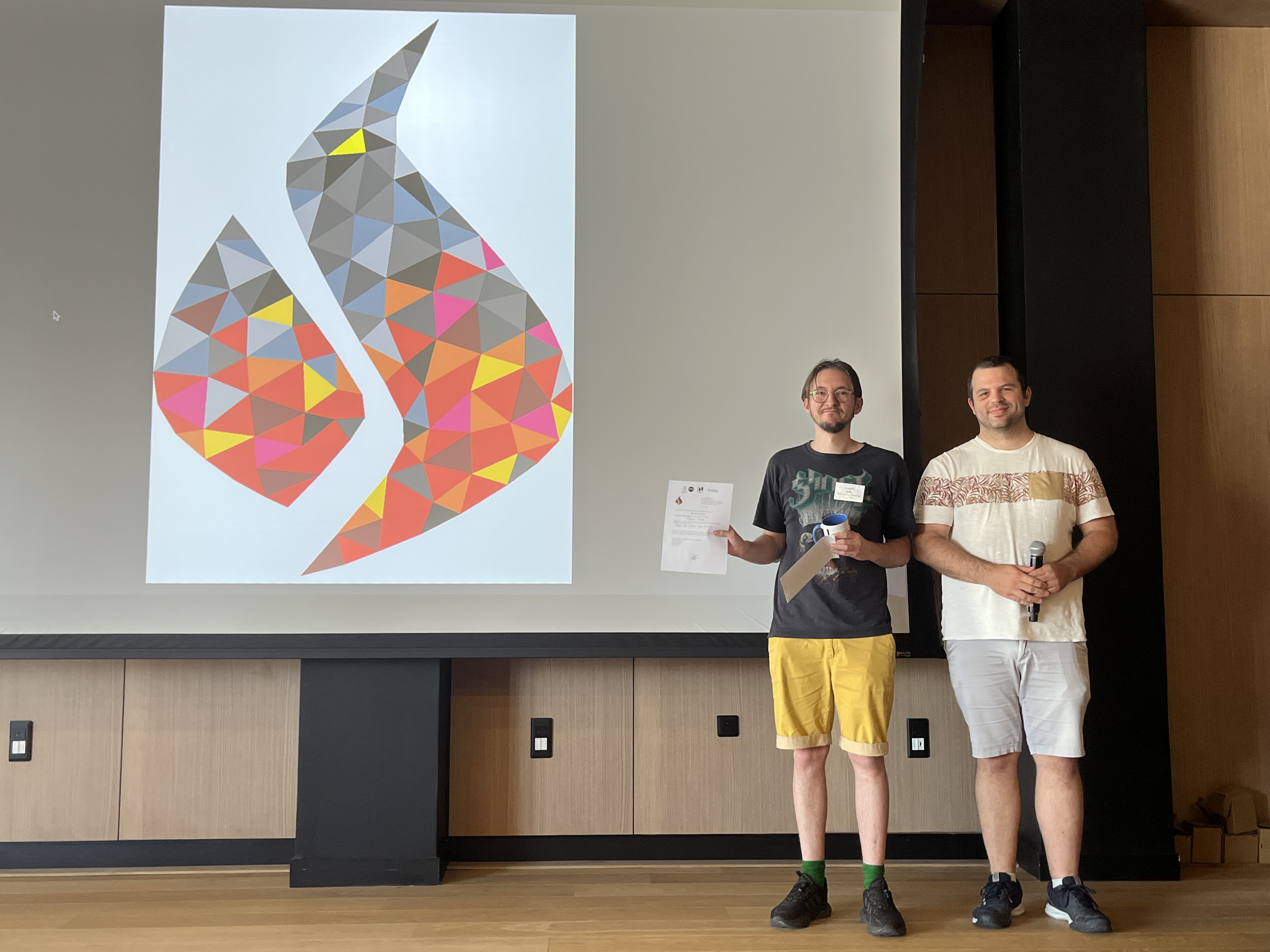
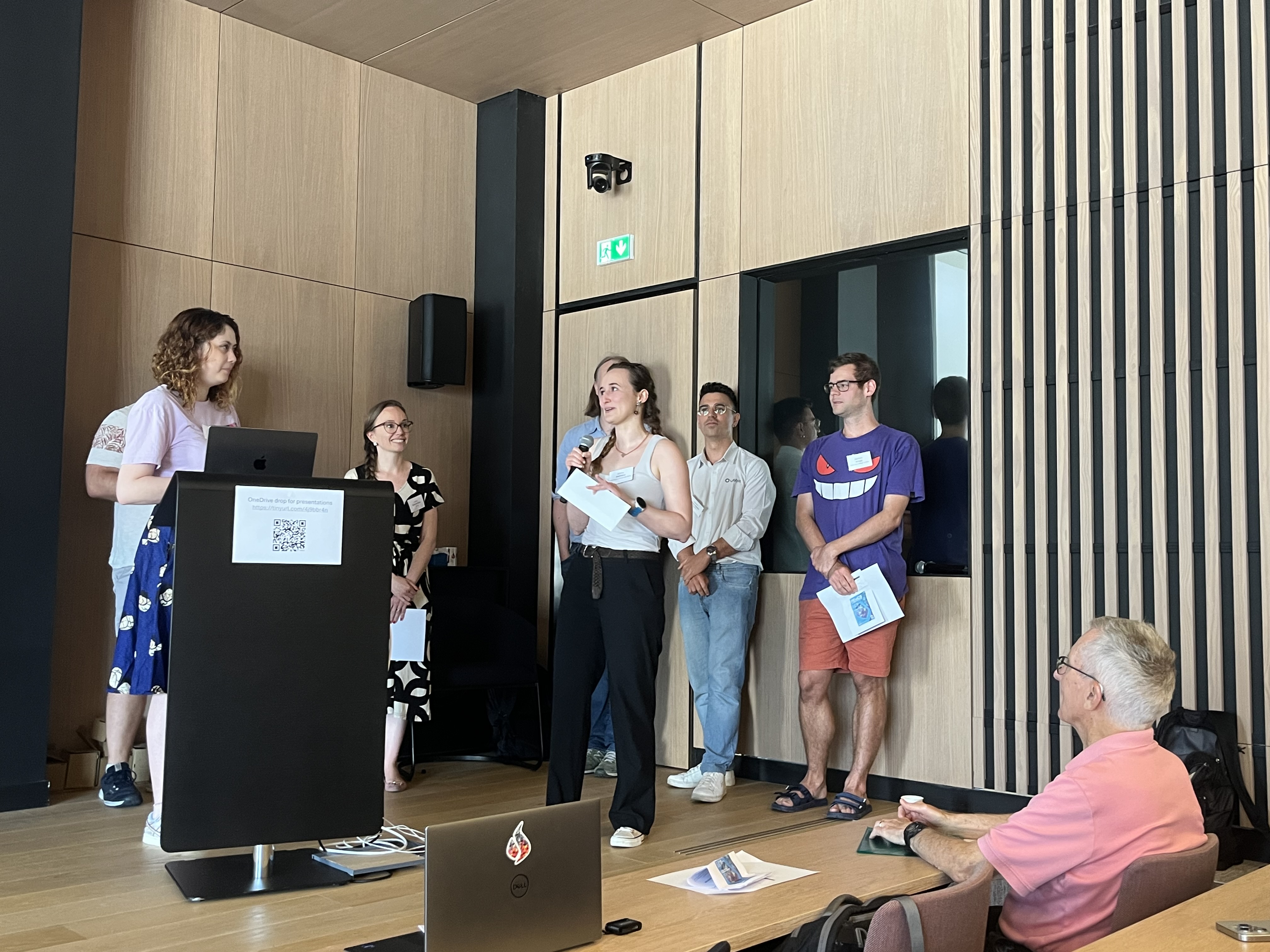
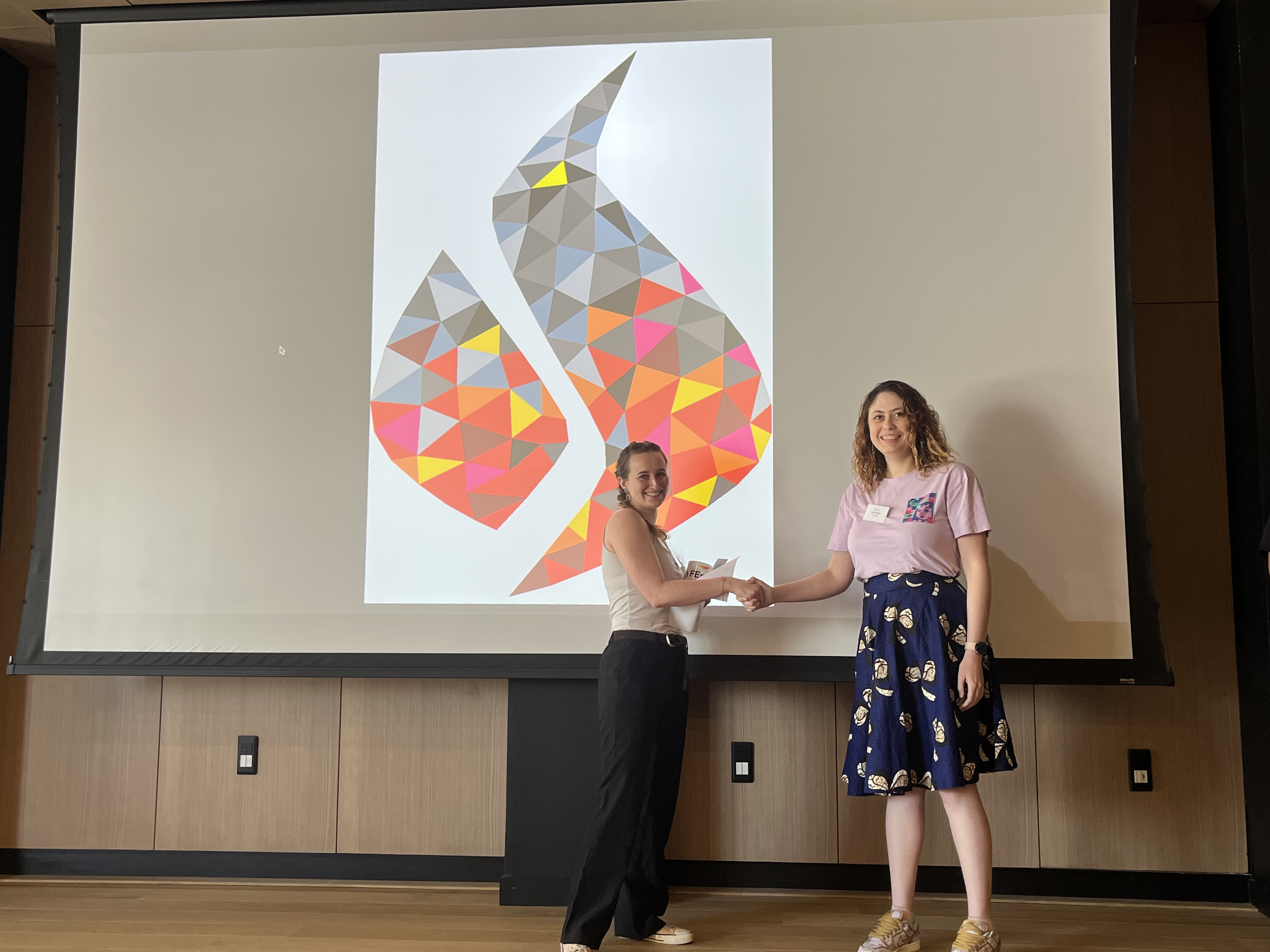
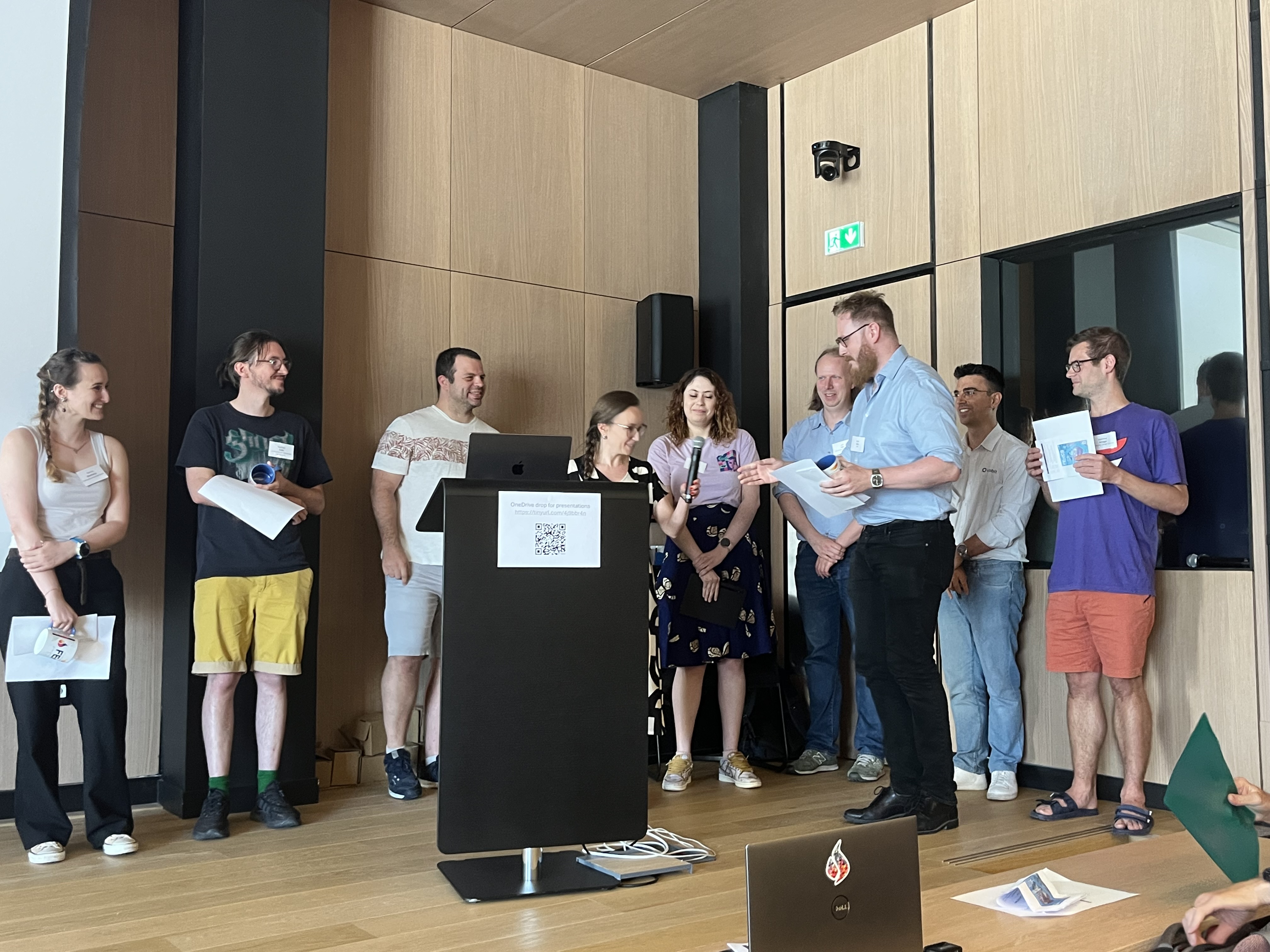
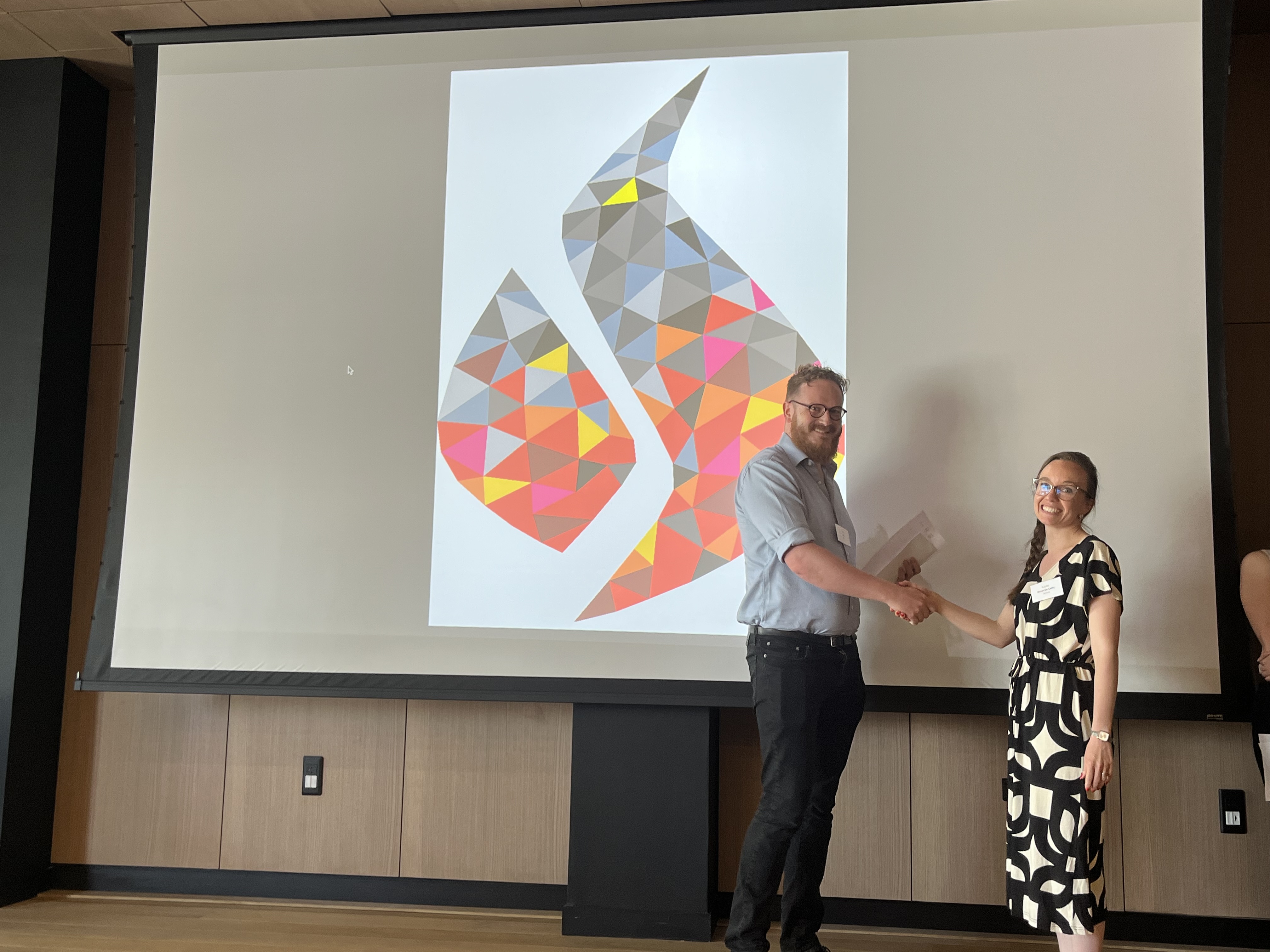
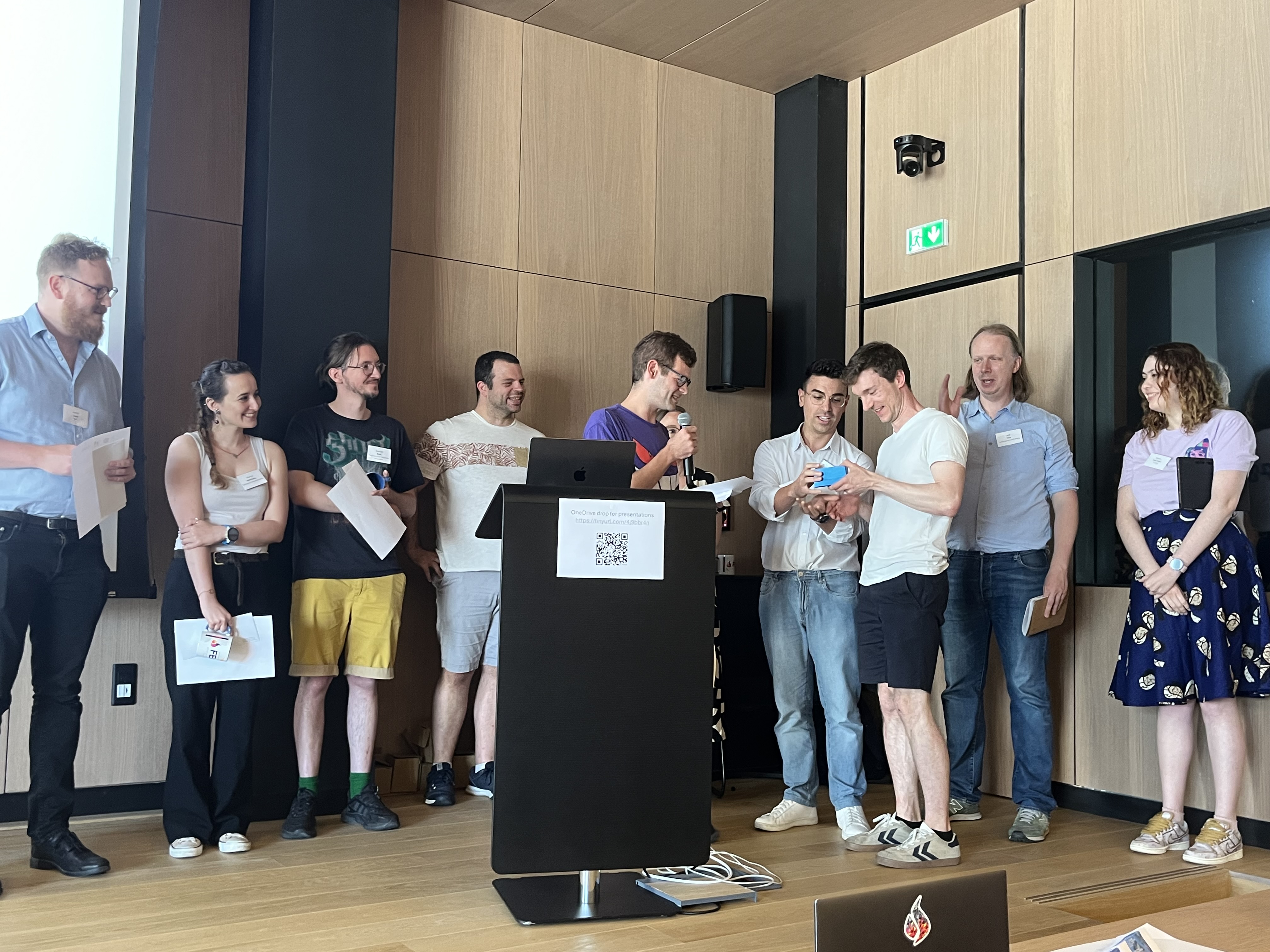
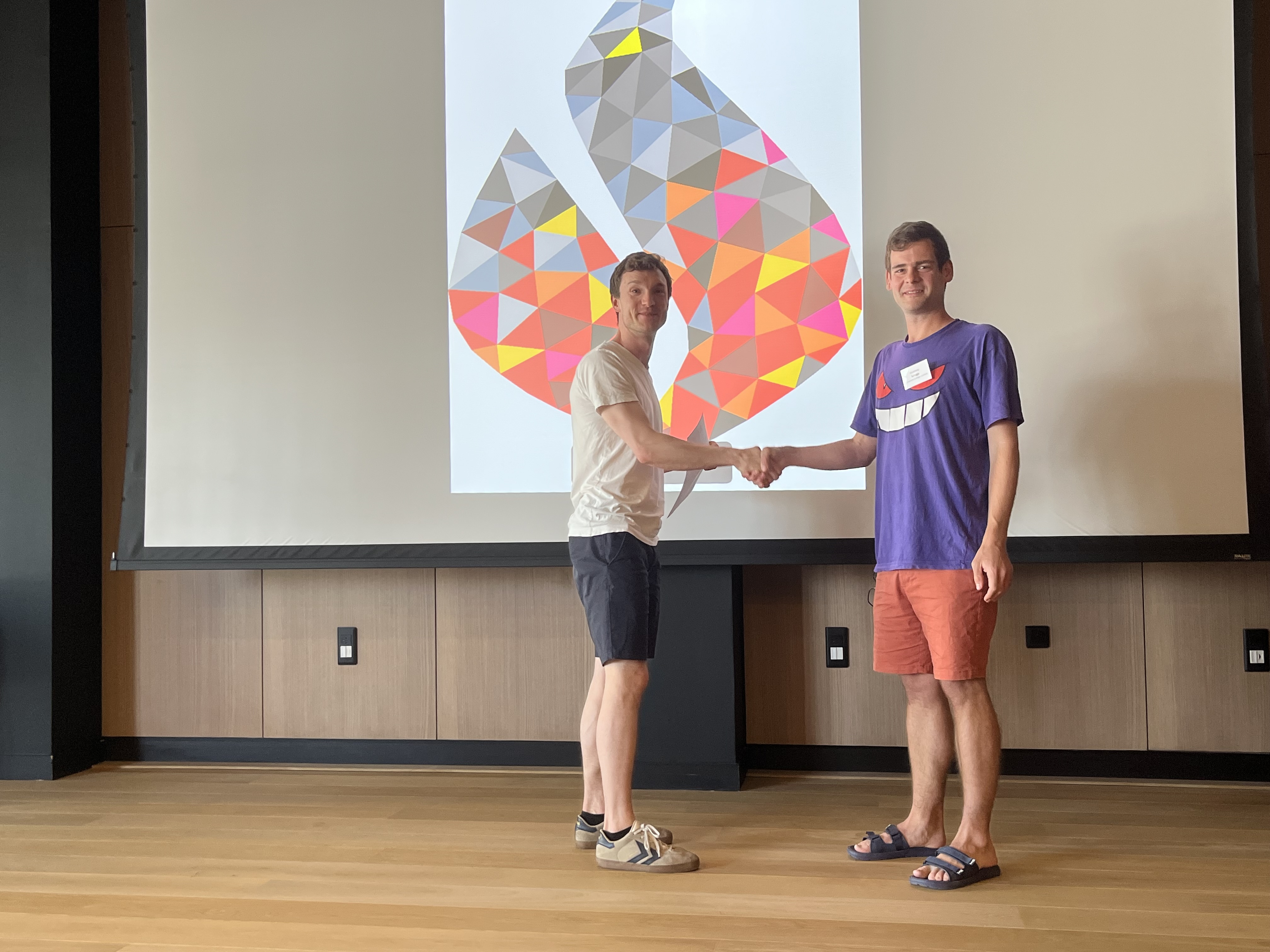
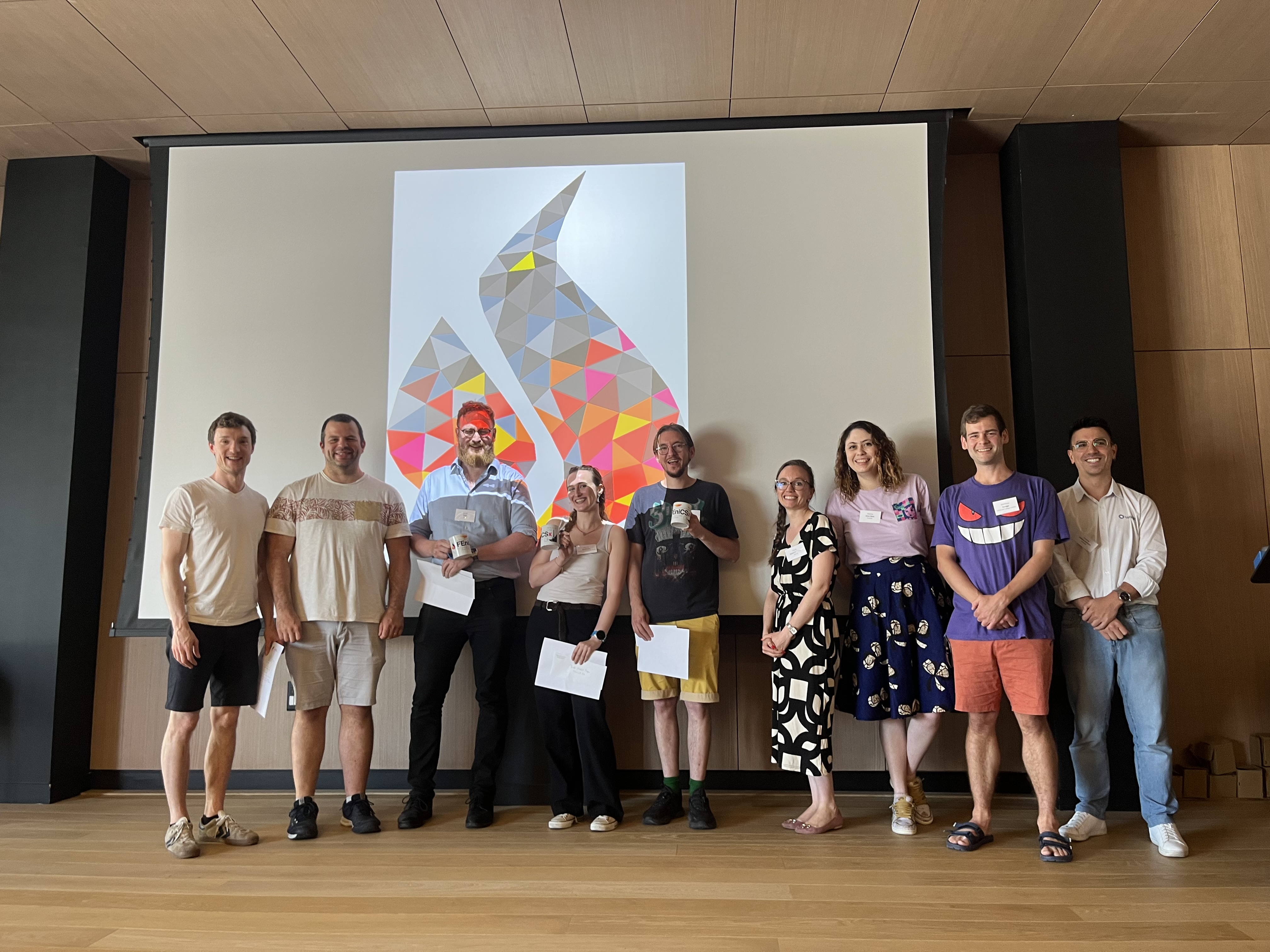
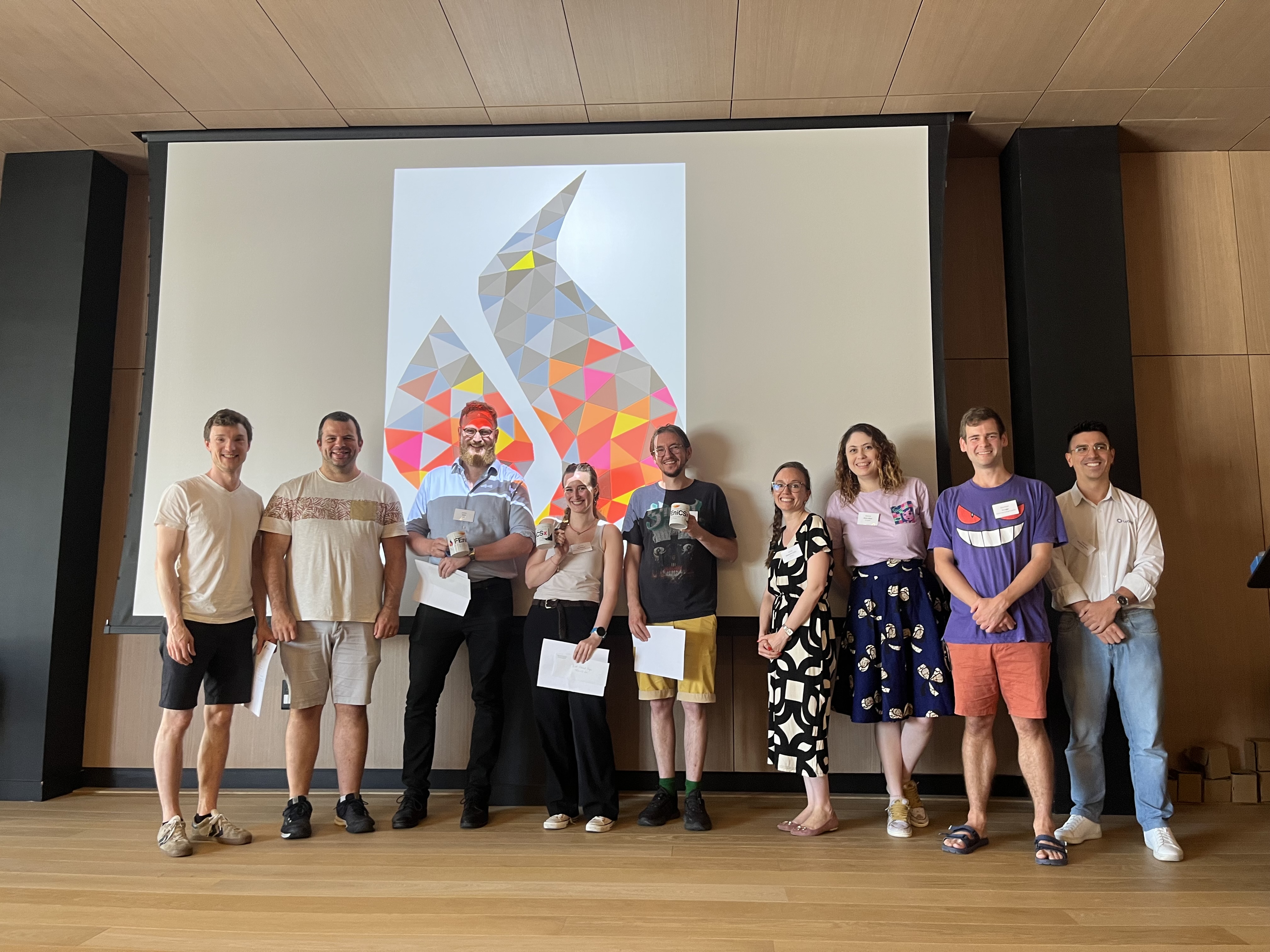
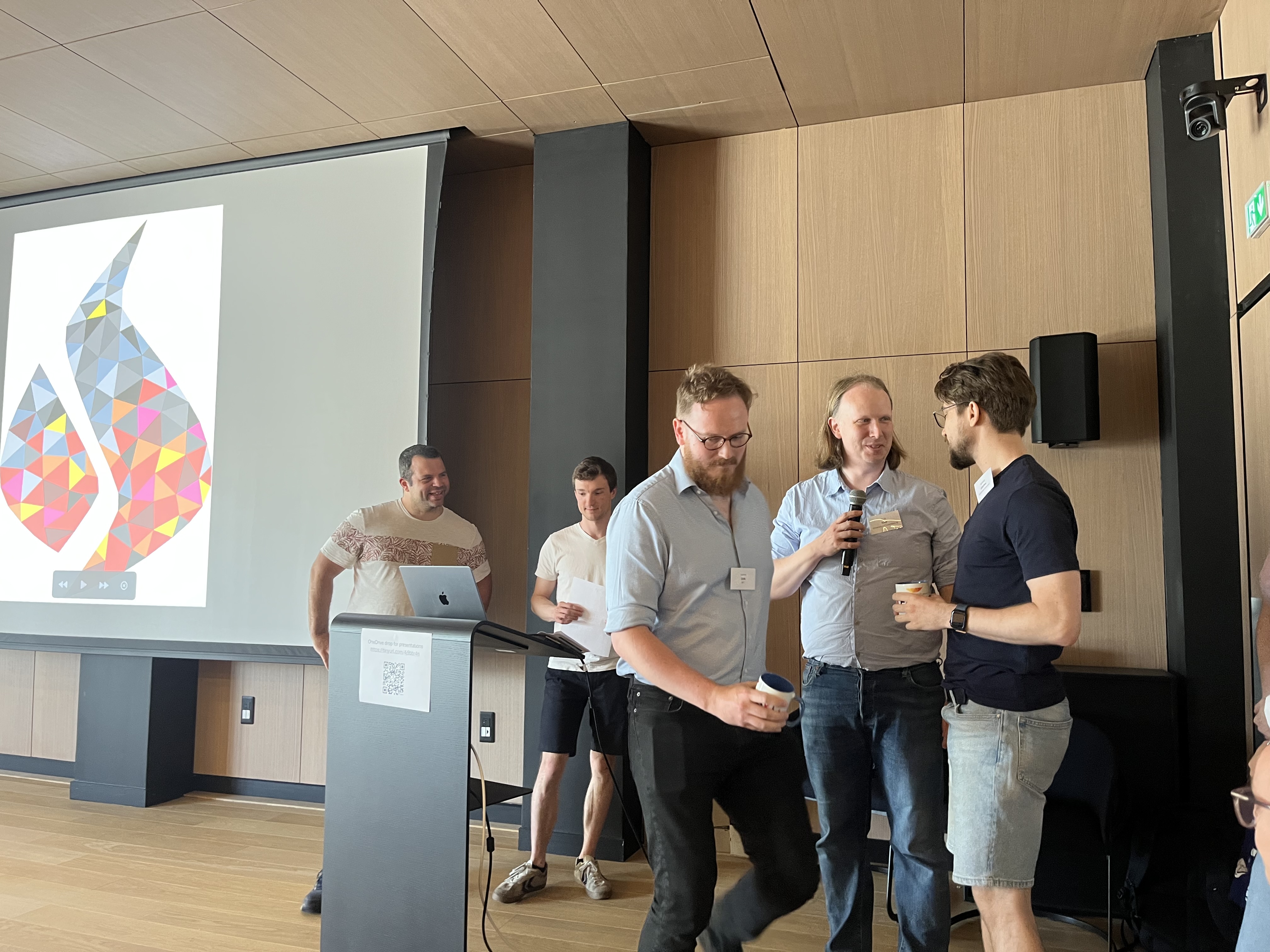
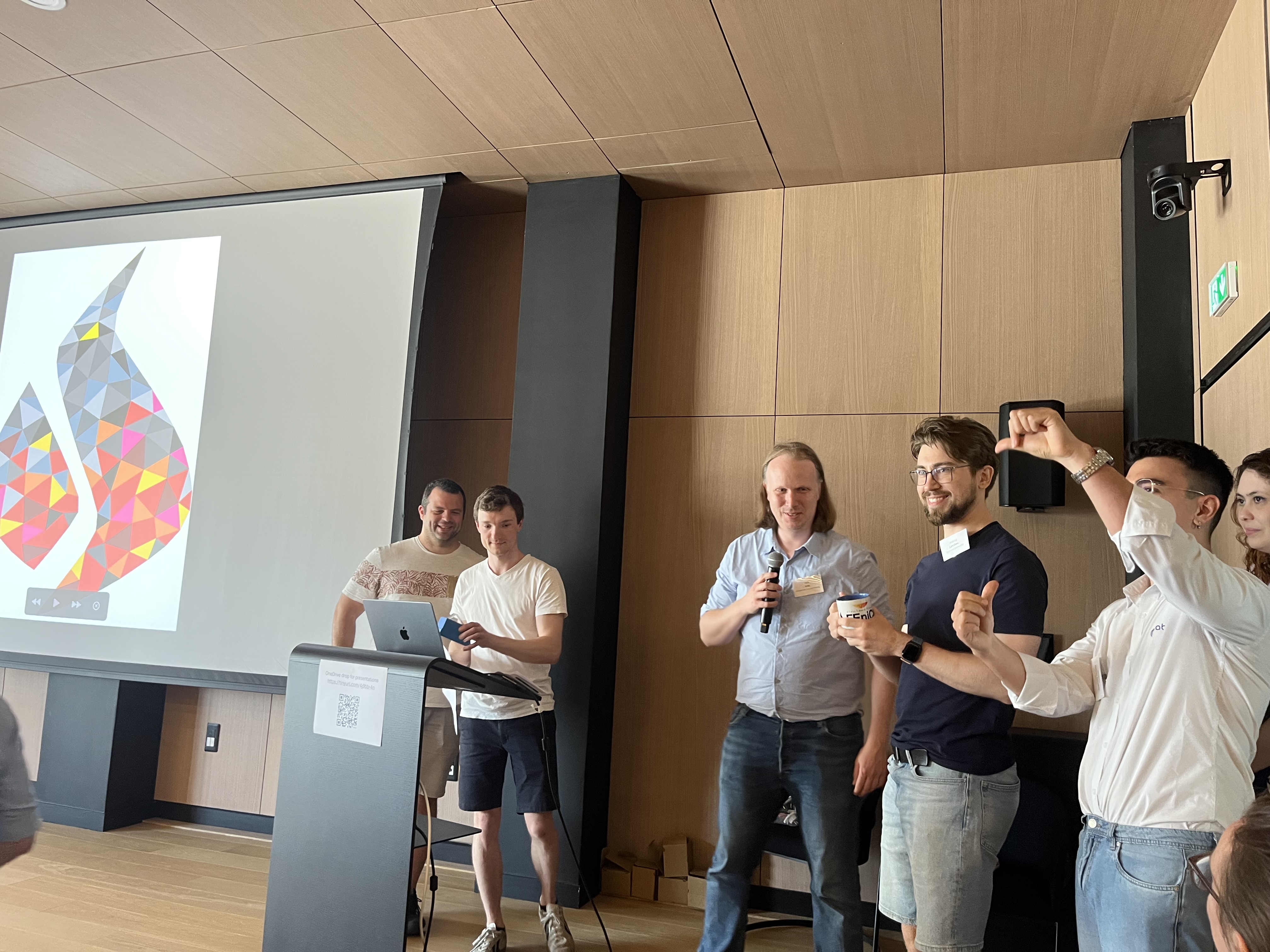
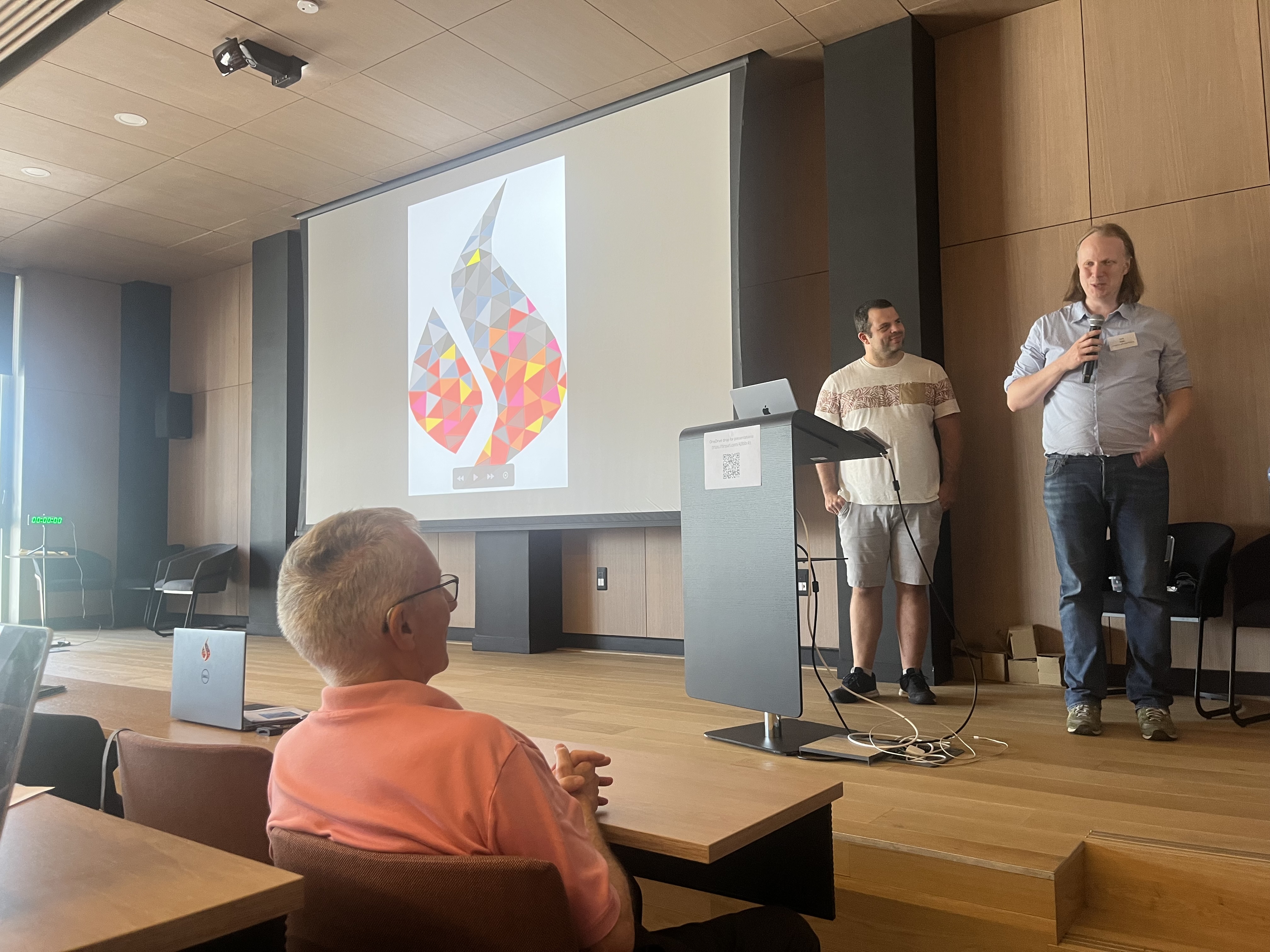
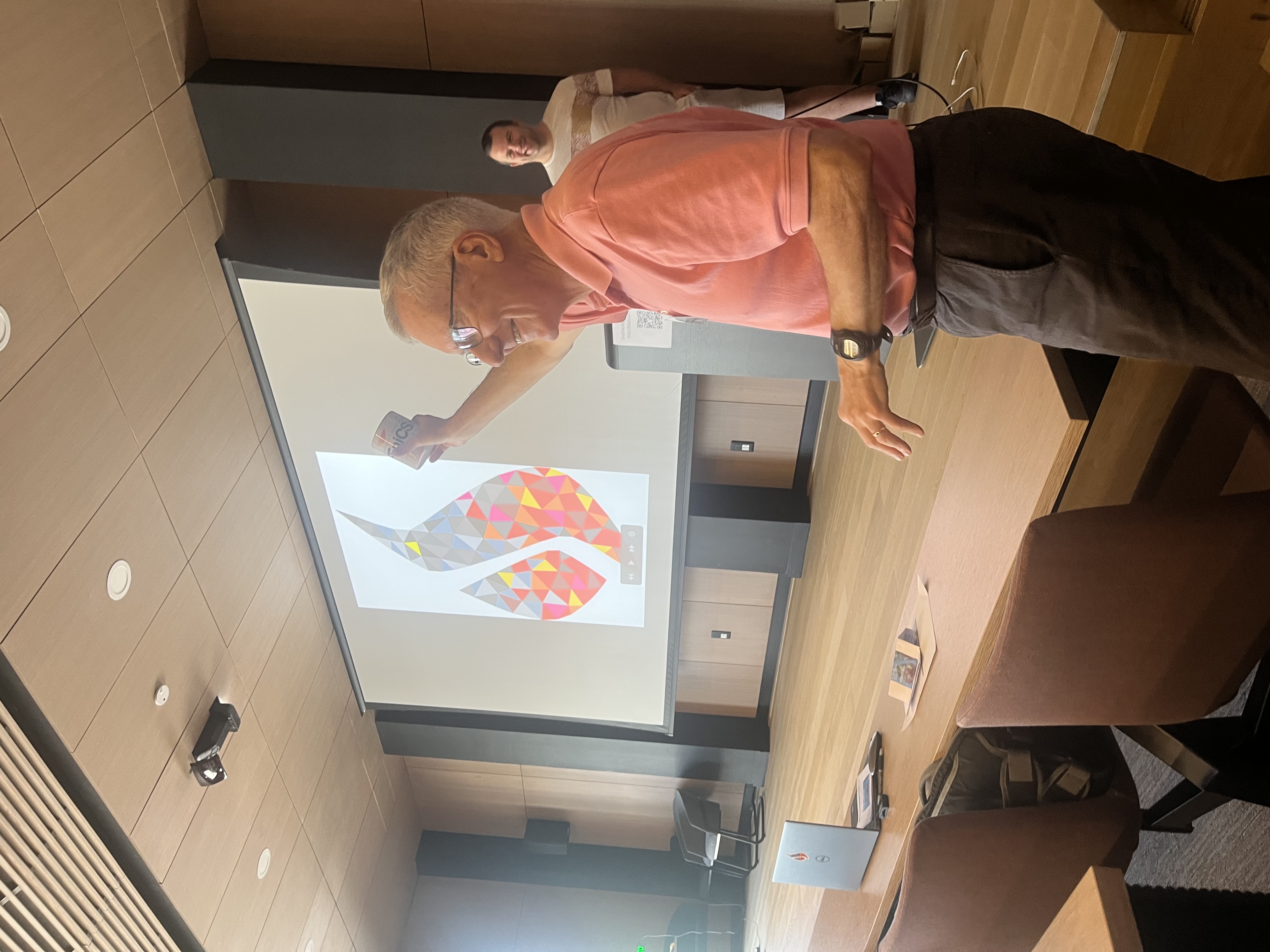
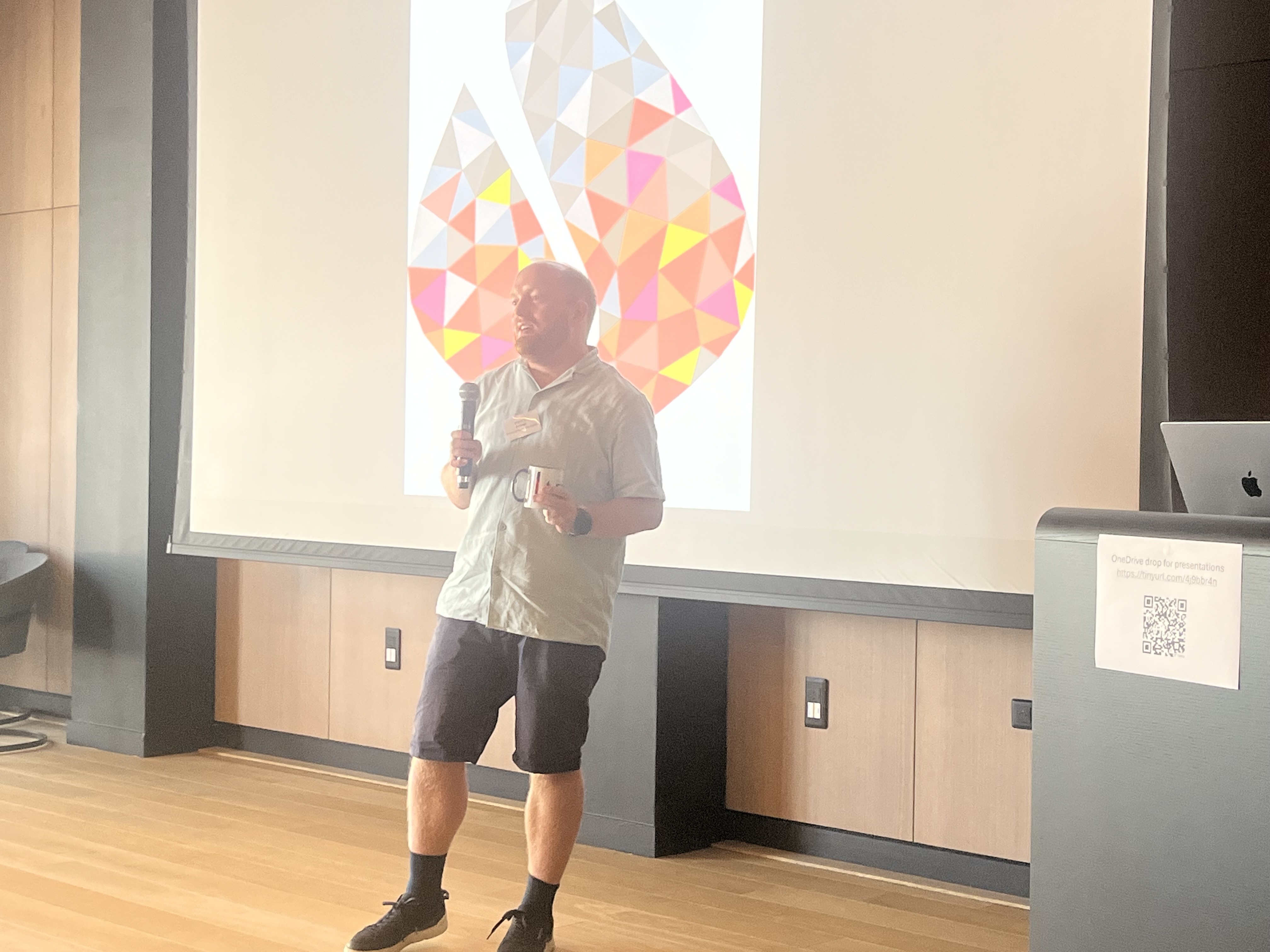
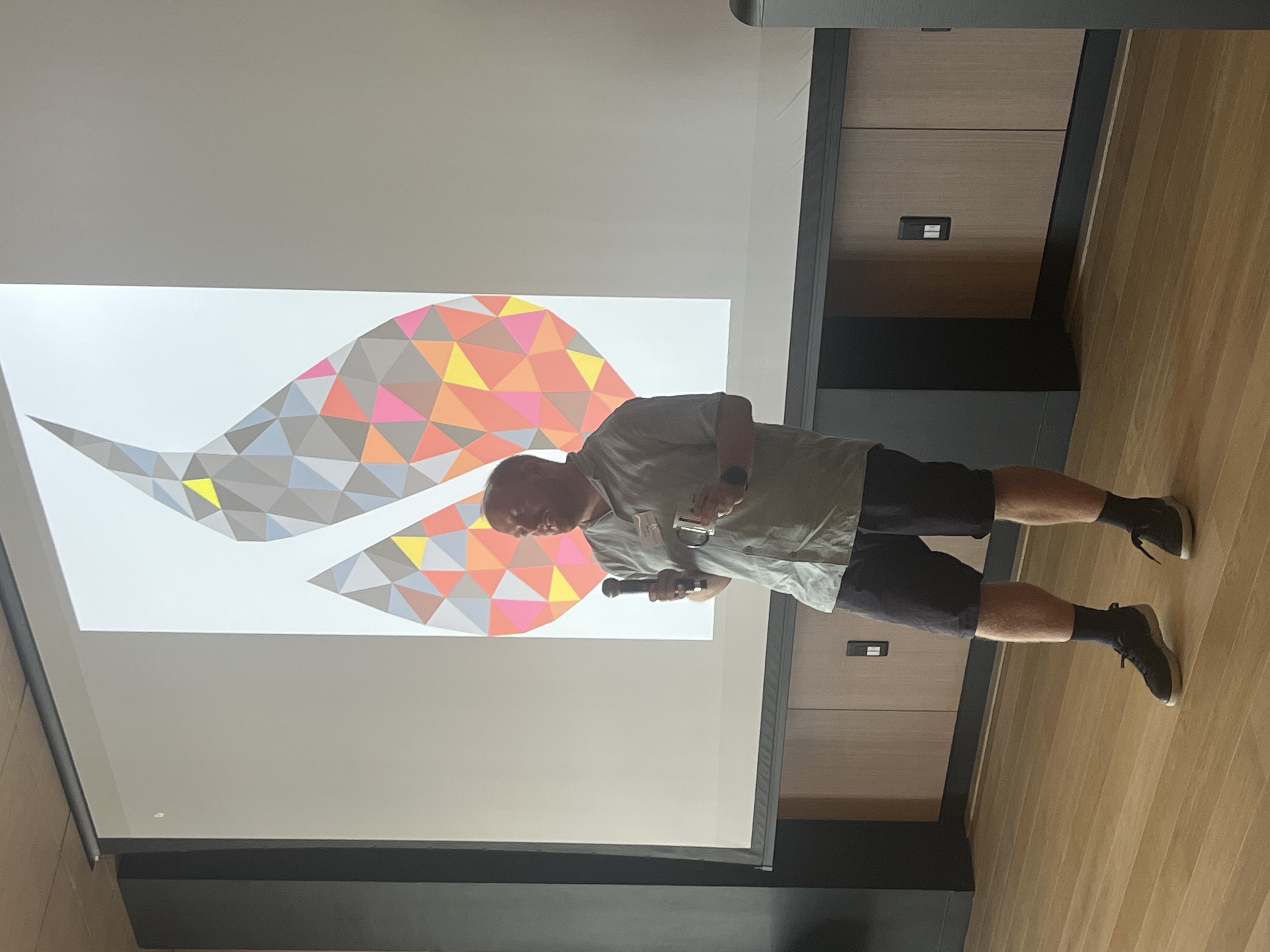
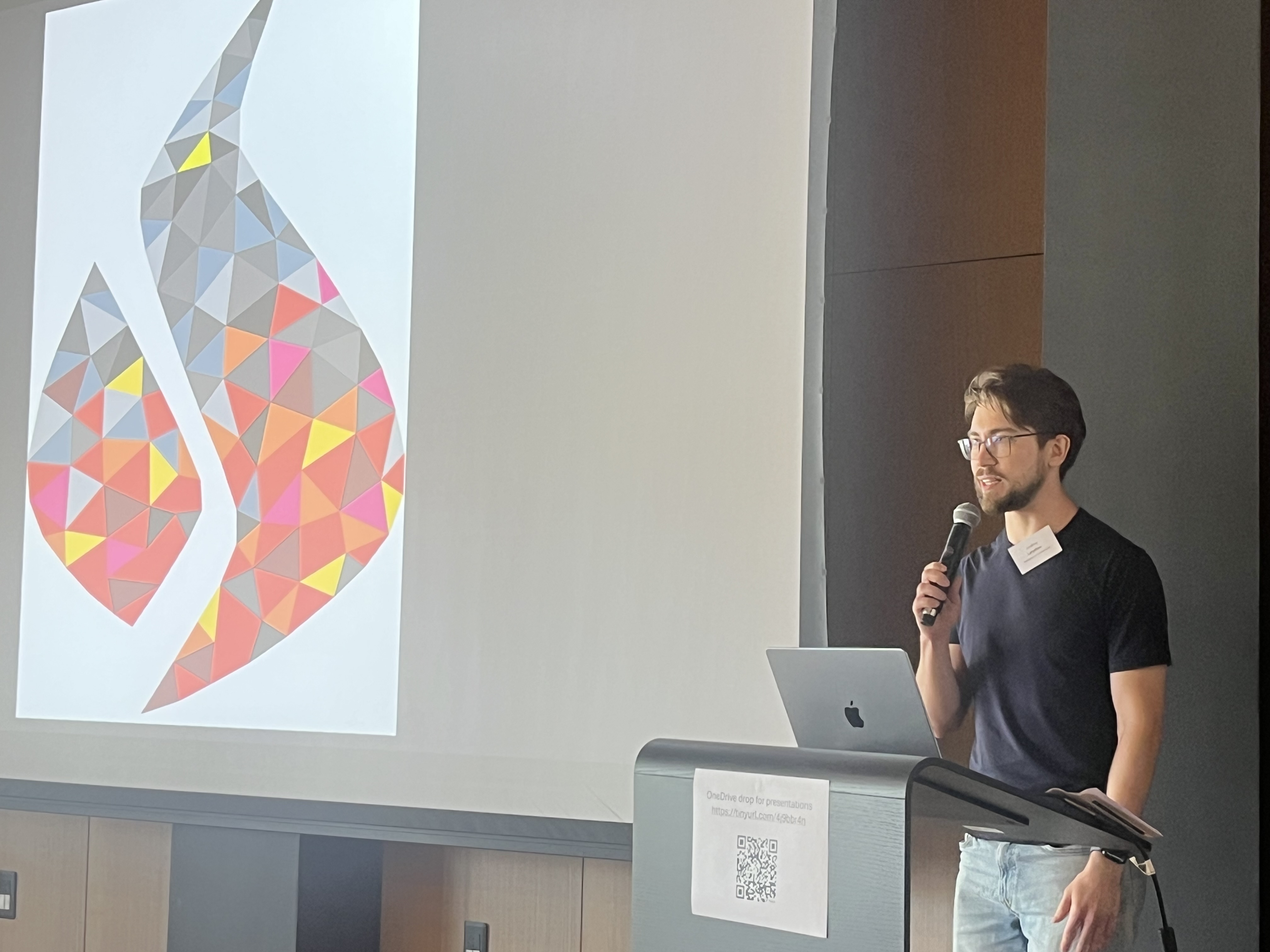
FEniCS 2026 Awardees
In this edition of the FEniCS Conference, alongside the main awards, the Award Committee decided to also award honorable mentions in each category (Poster, Presentation by a PhD Candidate, Presentation by a Postdoctoral Researcher) in recognition of the outstanding quality, scientific excellence, originality, and impact of the presented work.
Best Poster
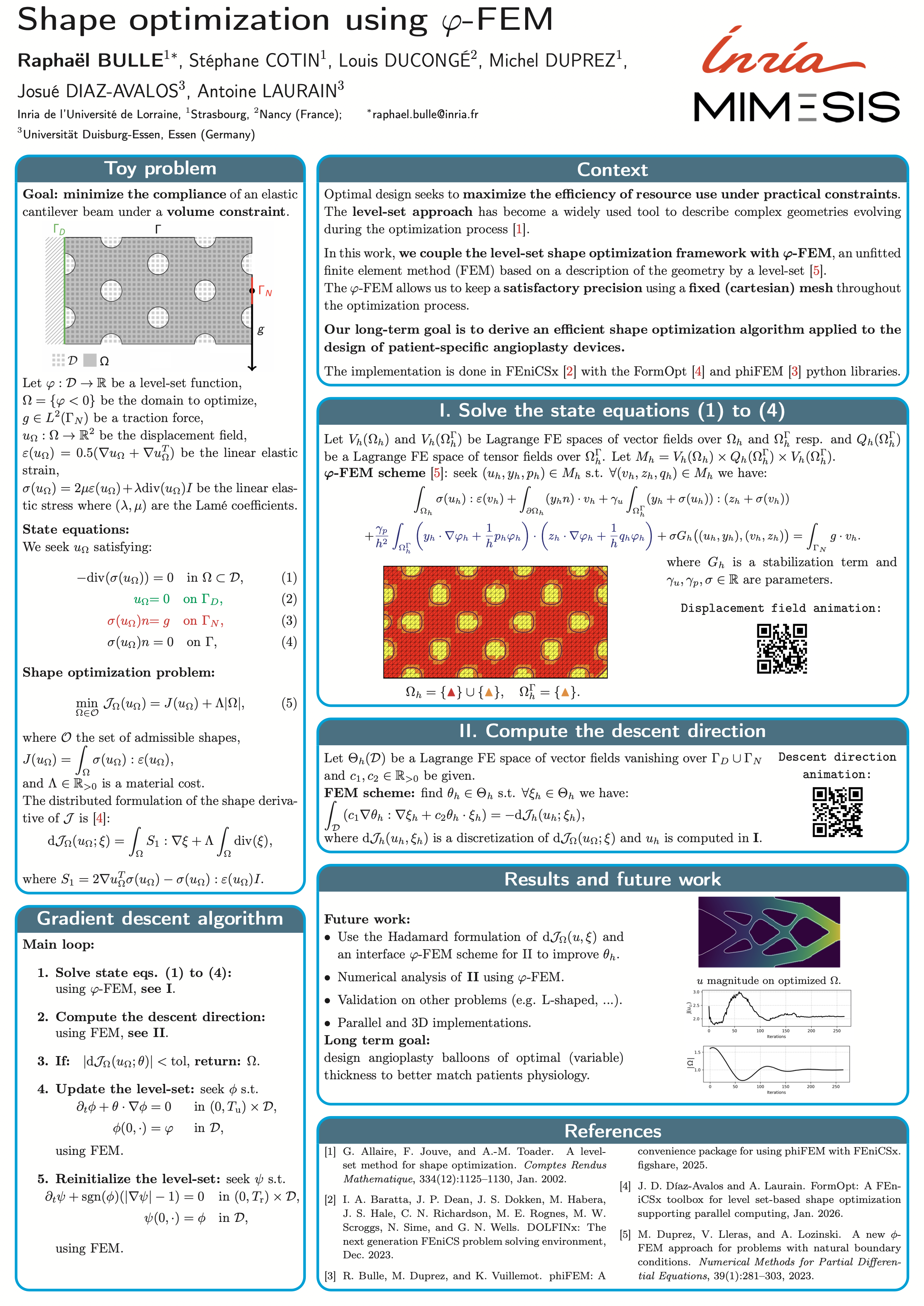
Best FEniCS 2026 Poster is awarded jointly to Raphaël Bulle and Louis Ducongé (Inria de l’Université de Lorraine, France) for their poster “Shape optimization using $\varphi$-FEM”.
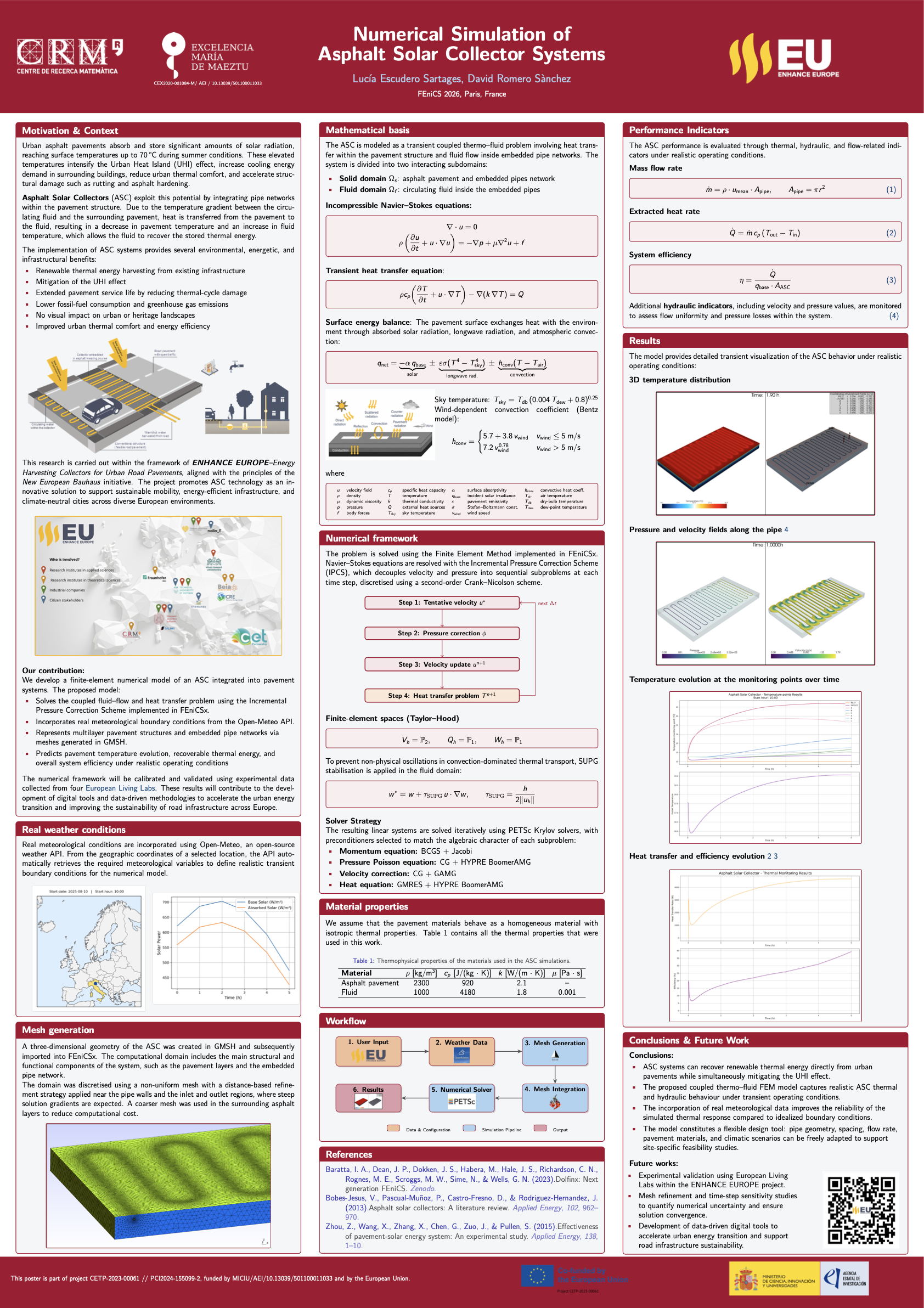
Honorable Mention for Best FEniCS 2026 Poster is given to Lucía Escudero Sartages (Centre de Recerca Matemàtica, Spain) for her poster “Numerical Simulation of Asphalt Solar Collector Systems”.
Best Presentation by a PhD Candidate
Best FEniCS 2026 Presentation by a PhD Candidate is awarded to Marina Matthaiou (Technische Universität Berlin, Germany) for her presentation “FELiCS: A Versatile Linearized Flow Solver for Multi-Physics Applications”.
Honorable Mention for Best FEniCS 2026 Presentation by a PhD Candidate is given to Ofir Mirkin (LIPhy - CNRS - INRIA, France) for his presentation “Towards fully programmable inflatable panels”.
Best Presentation by a Postdoctoral Researcher
Best FEniCS 2026 Presentation by a Postdoctoral Researcher is awarded to James Dark (MIT, USA) for his presentation “Multi-physics Modelling of Nuclear Fusion Reactor Components using FESTIM”.
Honorable Mention for Best FEniCS 2026 Presentation by a Postdoctoral Researcher is awarded to Javier Lorente-Macías (University of Cambridge, UK) for his presentation “Adjoint-accelerated inverse modelling of acoustic cross-talk in piezoelectric inkjet printheads”.
Exceptional Visualization
Nate Sime Award for Exceptional FEniCS 2026 Visualization is awarded to Marius Causemann for exceptional visualisation in his presentation “Inferring Human Intracranial CSF Absorption Sites via Inverse Modelling of Protein Transport”.
Features
- Single-track session for talks.
- Dedicated poster session including presentation of FEniCS-based software packages.
- Plenty of time for informal discussions and coding.
- Prizes for Best Presentation by a PhD Candidate, Best Presentation by a Postdoctoral Researcher, Best FEniCS 2026 Poster, and Exceptional Visualization.
- Advanced Tutorial Session: an optional hands-on session focused on advanced features and design of FEniCSx. It is scheduled as a morning session on the first day of the conference.
Advanced Tutorial Session
This edition of the conference included an optional hands-on session focused on advanced features and design of FEniCSx. The tutorials covered the following topics:
- “An exploration of advanced features in DOLFINx through the shifted boundary method” by Jørgen S. Dokken,
- “A guide to building and running FEniCSx on HPC systems” by Jack S. Hale.
The tutorials are now available online: FEniCS 2026 – Advanced Tutorial Session.
Conference venue
The conference will take place at:
University of Chicago | John W. Boyer Center
41 rue des Grands Moulins
75013 Paris
France
Lunch and Coffee Breaks
Coffee breaks are included in the conference registration fee; participants are responsible for their own lunch. For your convenience, a list of restaurants located within walking distance of the University of Chicago | John W. Boyer Center can be found here.
Travel awards
Flax & Teal and d’Alembert Institute | Sorbonne University have kindly offered to support travel awards for attendees who would otherwise struggle to come to the conference for financial reasons. Priority was given to junior students and researchers or those working in countries with a less developed research infrastructure.
Travel awards were given to
- Luis Gerardo Gutierrez Ibarra (University of Guadalajara, Mexico), who gave a talk on “Numerical investigation of urban heat island within variable porous urban domain”.
Code of conduct
We expect all attendees of FEniCS 2026 to follow the FEniCS Project code of conduct. Instances of abusive, harassing, or otherwise unacceptable behavior may be reported by contacting the conference organizers or the FEniCS Steering Council.
Best Presentation and Poster Awards
The following awards will be made at the FEniCS Conference 2026:
- Best FEniCS 2026 Presentation by a PhD Candidate ($500).
- Best FEniCS 2026 Presentation by a Postdoctoral Researcher ($500).
- Best FEniCS 2026 Poster ($500).
- Nate Sime’s Exceptional FEniCS 2026 Visualization (surprise prize).
We thank the Ridgway Scott Foundation for supporting Best Presentation and Poster Awards, and Nate Sime for supporting the Exceptional Visualisation Award.
Members of the FEniCS 2026 Award Committee
- Jérémy Bleyer (chair, École des Ponts).
- Cécile Daversin-Catty (Simula).
- Marina Maia (TU Delft).
- Matthew Scroggs (UCL).
Grading system for presentations
Judges use a seven-point scale (0-7) to judge presentations on the following criterion.
The score for each statement is weighted equally into a final score. The final decision is made jointly in the judges deliberation session taking the score and other comments into account.
Comprehension & Content
- The speaker provided clear background and significance to the research question.
- The speaker clearly described the research strategy/design and the results/findings of the research.
- The speaker clearly described the conclusions, outcomes and impact of the research, and was able to answer audience questions.
Engagement & Communication
- The oration was delivered clearly, and the language was appropriate for a non-specialist audience.
- The presentation slide deck was well-organized and enhanced the presentation.
- The presenter conveyed enthusiasm for their research, articulated thoughtful answers to questions, and captured and maintained the audience’s attention.
Grading system for posters
Judges use a seven-point scale (0-7) to judge the the poster and its presentation during the session on the following criterion:
Comprehension & Content
- The poster provided clear background and significance to the research question.
- The poster clearly described the research strategy/design and the results/findings of the research.
- The poster clearly described the conclusions, outcomes and impact of the research, and the presenter was able to answer the questions of the judges.
Engagement & Communication
- The poster used language was appropriate for a non-specialist audience.
- The poster was well-organized and visually appealing.
Nate Sime Award for Exceptional FEniCS Visualization
This award is intended to acknowledge the effort scientists place into the visual presentation of their work.
The winning image or video is judged to be most beautiful according to the committee’s subjective sense of aesthetics. Emphasis is given to the visual appeal of the image or video rather than the impact of the underlying science. Ideally the winning image or video summarises the complexity of the underlying science for the uninitiated scientist (“a picture tells a thousand words”).
The image or video must be:
- Composed from data generated primarily by using the FEniCS Project.
- Relevant to the advancement of science.
Sponsors
We acknowledge the generous support from the Flax & Teal to sponsor travel awards and poster session

as well as d’Alembert Institute | Sorbonne University for sponsoring the travel awards

We further thank sponsorship from the Ridgway Scott Foundation to support Best Presentation and Poster Awards.
Organizing committee
- Jérémy Bleyer, École des Ponts/IP Paris.
- Susanne Claus, ONERA.
- Jack S. Hale, University of Luxembourg and FEniCS Project Steering Council representative.
- Andrey Latyshev, Sorbonne Université and University of Luxembourg.
- Claire Lestringant, Sorbonne Université.
- Corrado Maurini, Sorbonne Université.
- Ridgway Scott, University of Chicago.
Contact
If you have any questions about the conference organization, please contact: fenics-2026@dalembert.upmc.fr.